
BookNookers Book Club

How It Works
We meet monthly in The Book Nook to enjoy a friendly social time as well as discussing the current month’s books. Teas and coffees are available too. We break into smaller groups to talk about our thoughts on the books - eg what we enjoyed or didn’t enjoy, how we felt about it, did we like the writing style, what were the main themes, how engaged were we with the characters, stories, settings, time period. It is all very relaxed and there is no pressure on anyone to contribute.
Members are encouraged to recommend books that they think would be a good choice for the book club and we vote to select two reads of different genres for the following month. You can choose to read either of the books or both.
Membership fees - either buy one of the selected monthly books with a 10% discount or pay a £4 fee
Anyone is welcome to just come along to see if it is for you, even if you haven’t read the monthly book.

BookNookers Book Club 2026 Dates
BookNookers Book Club 2026 meetings take place in the shop on the folllowing Thursdays at 7.30pm. 26th February 2026
26th March 2026
23rd April 2026
21st May 2026
25th June 2026
23rd July 2026
27th August 2026
24th September 2026
29th October 2026
26th November 2026
17th December 2026
Book Choices for 26th Nov meeting
Double Proof by Martin Stewart
Stolen whisky, drug dealers, bent cops, social influencers and yakuza mobsters. And Robbie Gould is caught in the middle. 1964.
A hoard of the finest Scotch whisky ever made – the legendary Dalziel Double Proof – goes missing. 2023. Albie, youngest son of the wealthy Dalziel family, vanishes.
His desperate mother turns to Robbie Gould, a disgraced reporter with a reputation as a 'psychic crimebuster'. Broke and unemployed, Gould is in no position to turn down the job. He throws himself into a twisted chain of criminals, bent cops and Japanese gangsters, but when someone fires a shotgun through his door, he realises he doesn't need supernatural powers to see how deadly the situation has become.
Post Mortem by Patricia Cornwall
Unbelievably to some of us, it is 30 years since this book was published, the first book featuring Kay Scarpetta in what has become a long-running and popular series.
From No. 1 bestselling author Patricia Cornwell A serial killer is on the loose in Richmond, Virginia.
Three women have died, brutalised and strangled in their own bedroom. There is no pattern: the killer appears to strike at random - but always early on Saturday mornings. So when Dr Kay Scarpetta, chief medical officer, is awakened at 2.33 am, she knows the news is bad: there is a fourth victim.
And she fears now for those that will follow unless she can dig up new forensic evidence to aid the police. But not everyone is pleased to see a woman in this powerful job. Someone may even want to ruin her career and reputation .
DECEMBER BOOK -
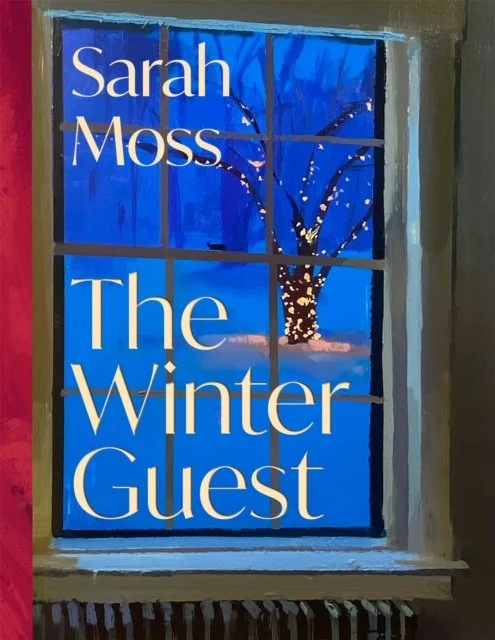
The Winter Guest by Sarah Moss
A gulp-it-down-in-one-sitting novel, The Winter Guest, from Sunday Times bestselling author, Sarah Moss, is an enthralling story about how the past will always come to find you in the end.
On Christmas Eve, in a hotel on Ireland’s west coast, a man and a woman meet for the first time. As a snowstorm gathers outside windows twinkling with fairy lights, they share a meal, pour wine, propose a toast. Janice and Gerry may be strangers to one another, but they each have a confession to make.
As the blizzard howls, the night will take an unexpected turn, and their conversation will have consequences far beyond the candlelit table . .

Things We Never Say by Elizabeth Strout I started with this and quite enjoyed it. It made me reflect on conversations that don’t quite happen and why we hold back from them. Based on some of the other books on the longlist, this is a pretty normal book and it would encourage me to read more of what she’d written. I didn’t realise that they wouldn’t all be like this! 7 out of 10.
The Palm House by Gwendoline Riley I “read” this as an audiobook. It left me fairly flat. I couldn’t get into it properly and I don’t recall too much about it. It just seemed to be various conversations between either the narrator and her work colleagues in a pub or between the narrator and her mother. The main part which has stayed with me is the description of a sexual encounter where the power dynamic was so unequal that it felt abusive. It was narrated in such a flat way that I found it quite unnerving. It did make me think about the relationship between the narrator and her mother which perhaps put the narrator more at risk of relationships of that nature. So I am grateful for that kind of insight which earns it a few points for that. 2 out of 10.
May We Feed the King by Rebecca Perry I really enjoyed this one; it’s my top-rated one so far. It’s apparently Rebecca Perry’s first novel, but she is already a published poet so there was plenty of white space in it and the chapters are often just a page long and read almost like poems themselves. The writing was so atmospheric particularly in the first section and I was completely drawn in to the narrator’s world. She arranges rooms in stately homes to make them as authentic as possible and tries to immerse herself in the world she is trying to depict. I was fascinated by that type of job. The second section is about a reluctant king who comes to the throne unexpectedly after the deaths of his two brothers. I enjoyed this part too though not as much as the first section. It details life in court, how his courtiers conduct themselves and how he and his wife lived. The final short section draws both parts together and encourages reflection about how we know what we know about history. Starts out more strongly than it finishes. 8 out of 10.
Helen of Nowhere by Makenna Goodman (Fitzcarraldo Editions) This is when it began to get a bit of a slog. Quite a strange book but it drew me in and I felt an urge to read it again as soon as I finished it which I can’t recall happening for years. At 168 pages it’s the shortest on the list. I was also intrigued by the plain blue cover and would be interested to read more of this publisher’s work. I’ve passed it to my English teacher friend to see what she makes of it. 6 out of 10 for the intrigue and the pull to read it again.
The Shadow of the Object by Chloe Aridjis I didn't enjoy this at all and nearly gave up on it simply because I couldn't summon enough energy to care how it ended. The story is strange. A woman visiting her parents in Mexico is bitten by a dog. As she is treated in hospital she meets an odd lady as a fellow patient. That patient has a huge interest in light shows and their paraphernalia. Later she returns to her home in London where she meets up with the lady’s son.
1 out of 10, and that’s only on account of quite an unusual purple cover.
The Vivisectors by Missouri Williams (4th Estate) Far too much of a slog, this one. Also contains a sub-plot of attempted suicide therefore not for everyone. Essentially the novel focuses on various characters associated with a university. A student who works for one of the professors, her family and another student whom the professor is fixated upon. And a group of gardeners who were referred to often and occasionally given centre stage for their discussion.
From time to time a character would make a remark which would spark my interest and touch on perhaps a deeper layer of meaning to the story. The title itself seems to refer to a tendency to dissect an issue to the point where there is no life or mystery left. To that end it seemed to be the polar opposite of The Things We Never Say as there were brutally honest to the point of cruel conversations between characters including the narrator’s father setting out in detail all his misgivings about her.
Early in the novel I considered reading it once again to see if I could penetrate that deeper meaning but towards the end of the book I was simply counting the pages down and was glad to move on to something else. Someone else more clever than I may be able to penetrate a deeper meaning. My overall assessment is that it was too complex to be enjoyable. It gains a few points for an interestung cover: an exercept of a Caravaggio painting of "Doubting" Thomas the disciple checking out if Jesus' wounds are genuine. 4 out of 10.
Black Bag by Luke Kiennard While I was reading this one, it was announced that it had made the Booker Short List of 2026 and I think its place is well deserved compared to others I have read. I found it warm and engaging with some genuinely laugh out loud moments and a thought-provoking premise that will stay with me for quite a while.
The main character (never named) is an out-of-work actor, always looking for his next big break. After a comical series of unsuccessful interviews and very short-lived jobs he applies for and gains work as black bag (no capitals, no definite article) which is a psychology experiment a university professor is running to determine reactions from students on campus to someone encased in black bag with only his bare lower legs visible. We hear how he manages on public transport, in Costa, at lectures and tutorials and his interactions with others drawn to or repelled from him. He gets embroiled in someone's sexual fantasy and in another's money-making scheme. As the book progresses he becomes more and more attached to black bag such that it is no longer a job but more a way of life. The ending is pacy, featuring a canal, a brush with death and a pedalo. But it ends hopefully, having finally tracked down his friend and also having found a community. Overall it was witty, engaging and thought-provoking about such subjects as loneliness and the superficial nature of some relationships. Intriguingly, there was a real-life black bag psychology experiment in 1967.
I don't know what else this author has read but I would be encouraged to track it down and read it. It reminded me of David Ross’s The Last Days of Disco: madcap and quirky. Highly recommended, my favourite so far. 8.5 out of 10.
The End of Everything by M John HarrisonThis was my 8th off the list. It's science-fiction, post apocalypse, set far in the future when Covid was an episode in childhood. The iGhetti, mentioned only in the background, are now in charge. The novel focuses on characters Philip and Marnie attempting to scrape an existence by the sea, somewhere in Kent. Houses have been abandoned and looted. Guns are carried, people are shot. There are no consequences to crime. One day Philip fishes a strange artefact from the sea which then accompanies him for the rest of the book, seemingly growing stronger as his strength reduces towards death.
This is not my genre at all and it did nothing for me. I was counting the pages from very early on. However, I have nothing to assess it against. It may be excellent; I can't tell but I don't think I will recall much of this later. 1 out of 10, with the rider that I am not the best person to review this.
he Disappearers by Marlon James. A very hard, uncomfortable read: chilling, sexually explicit throughout and very violent. Set in Jamaica, it begins in 1988 a time when homosexual activity was outlawed and there was great fear about AIDS. A group of young men meet up to rehearse for a play about gay lifestyles. There is a raid, one of them is violently killed, all are injured in different ways and two disappear. The story plays out about what happens in the immediate aftermath and in the seventeen years that follow, in turn being told by various members of the group. It covers uncomfortable truths about a society where a veneer of respectability masks a culture of violence, racism, homophobia, discrimination, abuse of power, trauma and a lack of accountability.
In the Acknowledgements, Marlon James describes the novel as total fiction, but actually happened. "The only way for them to see us is for us to disappear....To vanish you inhabit the pace where people don't look."
I find it a difficult book to read and to rate. I would never have read it if it hadn't been on the Booker list. Did I enjoy it? No. Did it make me look in corners where I would rather not look, did it make me think and did it contain some unpalatable truths that I would rather not think about? Yes, yes and yes. 7 out of 10.
All Them Dogs by Djamel White A pacy, gritty novel. Not really my thing although I enjoyed it more than I expected. Like The Disappearers, it made think about things I would rather not know about, specifically about the circumstances in which some children are growing up. It is set in Dublin, in a world of violence, drug-taking, drug debts and score-settling. Tony Ward has returned after five years away, keen to prove himself as an enforcer. But he has his own family issues and how will the tangle of gang and family loyalties affect him? For all his bravado, it’s episodes and memories from his upbringing and school days that still influence his actions.
his is a debut novel by Djamel White, an Irish writer from Dublin. 230 pages so a quick read. Good cover with the picture of a man with his head in his hands. 7 out of 10.
John of John by Douglas Stuart A joy of a book. Beautiful writing, sparse and concise. I was tempted to jump on a ferry and sail to the Outer Hebrides or at the very least start reading it all over again to stay immersed in this world.
The novel is set in Harris about 40 years ago, in the days of Walkmans and before debates about Section 28. Cal returns to Harris after his college course on the mainland, amidst fears for his grandmother's health. As the next year unfolds, we hear of how Cal came to be brought up by his father and grandmother and of the many layers of connections between his family and their neighbours who have lived, worked and worshipped together over generations. Like the Harris tweed they are weave together, the islanders might seem uniform at first glance but there is a whole diversity of colour the closer we look. And mostly, it is the men's voices we hear, although the women’s stories are just as intriguing.
This is the last of the Booker longlist I read, having started three months ago with The Things We Never Say. Like Elizabeth Strout's novel, I was reminded of family secrets which are never discussed and how those play out over the years. The copy of the book I bought from The Booknook is marked as a "Signed Independent Bookshop Edition." It contains a Q&A with Douglas Stuart explaining how he wanted to set a novel in the Outer Hebrides and explore how difficult it must be to be a gay man living in a rural community, particularly where religion is such a strong part of life.
Had it not been for the Booker list, this is the only novel out of the thirteen I would probably have bought. It was the only one by an author I had previously read. That said, I was a bit nervous about reading it. Could it live up to my expectations and did it deserve the hype it was receiving? In my view, that praise is well deserved. 9 out of 10.
How To Buy Book Club Books
You can order your BookNookers Book Club books using the form. We'll be in touch when your order is ready for collection.Alternatively, pop into the shop and purchase your books in store.Book Club Reads - last 12 months
-
No Friend to this House by Natalie Haynes
Perfect for fans of The Odyssey* A Marie Claire Best Book of 2026 *Exiled daughter, abandoned wife, vengeful mother. But is that where the truth lies? This is the story of Medea as you’ve never heard it before. Jason and his Argonauts set sail to find the Golden Fleece.
The journey is filled with danger, and if Jason ever reaches the distant land he seeks, he faces almost certain death. Medea – priestess, witch, and daughter of the brutal king who jealously guards the fleece – has the power to save Jason's life. Will she betray her family and her home?Burning with desire for this stranger, as the gods intend, Medea chooses Jason over her kin.
But their love is steeped in vengeance from the beginning, and no one – not even those closest to them – will be safe when their passion is spent…&
Artificial Wisdom by Thomas R Weaver
A suspenseful sci-fi thriller exposing the fate of humanity, perfect for fans of PROJECT HAIL MARY, THERE IS NO ANTIMEMETICS DIVISION and WOOL. 'As modern as tomorrow and even more frightening... Stunning' Terry Hayes, bestselling author of I Am Pilgrim'An imaginative, impressive debut...
Particularly compelling is Weaver’s riveting vision of technology in the near future and its ramifications once humans can no longer discern what is real' The Times________Who would you trust with the future?The year is 2050. In the teeth of a climate catastrophe, the world is left with a drastic solution: one global leader to steer it through the coming apocalypse. The final two candidates are ex-US President Lockwood, and Solomon, the world’s first political artificial intelligence.
As whispers of a global conspiracy emerge, investigative journalist Marcus Tully find himself at the centre of it – when Solomon’s creator turns up murdered. Overnight, one investigation becomes two, and it’s not just the result of the election that’s at stake but the future of the species. Suddenly humanity must make an impossible choice – between salvation, or freedom. -
Atmosphere by Taylor Jenkins Reid
An epic novel set against the backdrop of the 1980s space shuttle program about the extraordinary lengths we go to live and love beyond our limits. In the summer of 1980, Joan Goodwin begins training to be an astronaut at Houston's Johnson Space Centre, alongside an exceptional group of fellow candidates.
As the new astronauts prepare for their first flights, Joan finds a passion and a love she never imagined and begins to question everything she believes about her place in the observable universe. Then, in December of 1984, on mission STS-LR9, everything changes in an instant. Atmosphere is a soaring story about the transformative power of love - this time among the stars.
***THE NUMBER ONE SUNDAY TIMES AND NEW YORK TIMES BESTSELLER***'The read of the summer' SUNDAY TIMES'A richly drawn page-turner' OBSERVER'Beautifully written, immersive' THE TIMES'Our favourite TJR novel yet' COSMOPOLITAN'I absolutely adored this'&
The Magical Matcha Teashop by Natasha Bache
Welcome to Lavender Hollow… your next small town romance obsession! Grace fled London with a broken engagement and a wedding dress she still hasn't paid for. Max returned home with secrets of his own, and a painful past he’d much rather leave behind. But neither expected to find magic hiding in a cup of matcha.
Because in the sleepy village of Lavender Hollow, something unusual is brewing… As Matcha Made in Heaven’s newest employee, Grace soon realises she has an extraordinary gift when customers start crying over their lattes and spilling secrets they never meant to share. In the warmth of the cosy teashop, will Grace and Max discover that the best recipe for love might be one brewed together? For fans of cosy fantasy romance, The Magical Matcha Teashop serves up the perfect blend of small-town charm, found family, spicy romance and just a sprinkle of magic. -
Little Red Death by Alexandra Benedict
ONCE UPON A TIME LIKE YOU'VE NEVER READ IT BEFORE…DI Lyla Rondell is on the case of a lifetime. Tasked with investigating a series of perplexing deaths, the only lead she has is that each appears to be based on a different classic fairy tale. Far from the stuff of bedtime stories, the press is having a field day with what they have named the Grimm Ripper Murders.
But as the bodies stack up, Lyla’s whole world is about to flip on its head. Because the killer’s bloody trail stretches deep into her own origin story, and when she discovers the truth, nothing will ever be the same again. Faced with the fact that everything she knows is fiction, Lyla will have to take a little creative license of her own if she’s going to turn the final page on the killings…'An exquisite puzzle of a crime thriller, it revels in the shadows, as reality is savagely entwined with the very roots of storytelling itself… Prepare to be spellboundA Prayer for Owen Meaney by John Irving
If you care about something you have to protect it. If you're lucky enough to find a way of life you love, you have to find the courage to live it.'Summer, 1953. In the small town of Gravesend, New Hampshire, eleven-year-old John Wheelwright and his best friend Owen Meany are playing in a Little League baseball game.
When Owen hits a foul ball which kills John's mother, their lives are changed in an instant. It is dismissed as a tragic accident but Owen disagrees. He believes that he is God's instrument, put on Earth for a higher purpose.
And as the boys come into adulthood to the background of the Vietnam War, a series of remarkable events show that perhaps Owen's divine plan was not imagined after all. Discover the funny yet poignant classic by the bestselling author of The World According to Garp. 'So extraordinary, so original, and so enriching' Stephen King, The Washington Post' -
This Bright Life by Karen Campbell
Margaret - an elderly widow who just wants to be left with her memories and her quiet, contained life. Claire - newly divorced, downsizing into the neighbourhood and way too busy to mend a broken heart. Gerard - a tearaway twelve-year-old who hates his name but loves his little brother and sister.
Gerard is a bright kid, but trouble always follows him. No one really knows what it's like at home; he's used to carrying a lot on his small shoulders. Gerard doesn't always make good decisions.
One morning, he makes a very bad one, upending not just his world, but the lives of Margaret and Claire too. Both heart-breaking and life-affirming, This Bright Life is a story of messy lives, second chances and the many hands it takes to build a boy.The Sentence by Louise Erdrich
A small independent bookstore in Minneapolis is haunted from November 2019 to November 2020 by the store's most annoying customer.
Flora dies on All Souls' Day, but she simply won't leave the store. Tookie, who has landed a job selling books after years of incarceration that she survived by reading 'with murderous attention,' must solve the mystery of this haunting while at the same time trying to understand all that occurs in Minneapolis during a year of grief, astonishment, isolation and furious reckoning. The Sentence begins on All Souls' Day 2019 and ends on All Souls' Day 2020. -
If Nobody Speaks of Remarkable Things by Jon McGregor
On a street in a town in the North of England, ordinary people are going through the motions of their everyday existence – street cricket, barbecues, painting windows… A young man is in love with a neighbour who does not even know his name. An old couple make their way up to the nearby bus stop. But then a terrible event shatters the quiet of the early summer evening.
That this remarkable and horrific event is only poignant to those who saw it, not even meriting a mention on the local news, means that those who witness it will be altered for ever. Jon McGregor's first novel brilliantly evokes the histories and lives of the people in the street to build up an unforgettable human panorama. Breathtakingly original, humane and moving, If Nobody Speaks of Remarkable Things is an astonishing debut.The Names by Florence Knapp
It is 1987, and in the wake of a great storm, Cora sets out with her young daughter to register the birth of her son. Her husband expects her to follow tradition and call the baby after him - but is it right for her child to inherit his name from generations of domineering men? Her choice will shape the course of their lives.
Seven years later, her son is Bear, a name chosen by his sister, hoping he will grow up to be brave and big-hearted. Or he is Julian, the name his mother set her heart on, keen for him to become his own person. Or he is Gordon, named after his father and raised in his cruel image - but is there still a chance to break the mould? Powerfully moving and full of hope, this is the story of three names, three versions of a life, and the infinite possibilities that a single decision can spark. -
The Women by Kristin Hannah
A sweeping story of epic love, heartbreaking loss, extraordinary bravery and the unbreakable bond of female friendship about the women who answered the call of the Vietnam War and paid the price.
They answered the call. Then they fought to be remembered.
'Women can be heroes, too'. When twenty-year-old nursing student, Frances "Frankie" McGrath, hears these unexpected words, it is a revelation. Raised on California's idyllic Coronado Island and sheltered by her conservative parents, she has always prided herself on doing the right thing, being a good girl.
But in 1965 the world is changing, and she suddenly imagines a different path for her life. When her brother ships out to serve in Vietnam, she impulsively joins the Army Nurses Corps and follows his path. As green and inexperienced as the young men sent to Vietnam to fight, Frankie is overwhelmed by the chaos and destruction of war, as well as the unexpected trauma of coming home to a changed America.
But Frankie will also discover the true value of female friendship and the heartbreak that love can cause. 'Thank God for girlfriends. In this crazy, chaotic, divided world that was run by men, you could count on the women'Ward D by Frieda McFadden
Ward D: a gripping locked room thriller set in an eerie hospital ward. ***Medical student Amy Brenner is spending the night on a locked psychiatric ward. All she has to do is make it through the night shift...
Ward D is the hospital’s mental health unit and as a medical student, Amy is required to gain experience on the floor. But little do her colleagues know it may force her to confront a past she’s fought hard to forget. The night starts.
The countdown begins. As the hours tick by, Amy grows increasingly convinced something terrible is happening within the ward’s tightly secured walls. When patients and staff start to vanish without a trace, it becomes clear that everyone on the unit is in grave danger.
Amy never wanted to spend the night on Ward D. Now, she might not make it out alive. Ward D once again demonstrates why Freida McFadden is the most talked-about voice in contemporary crime fiction, delivering a taut psychological thriller that will have you gripped right to the thrilling final twist. -
The Land in Winter by Andrew Miller
DECEMBER 1962, THE WEST COUNTRY. Local doctor Eric Parry, mulling secrets, sets out on his rounds, while his pregnant wife sleeps on in the warmth of their cottage.
Across the field, funny, troubled Rita Simmons is also asleep, her head full of images of a past life her husband prefers to ignore. He's been up for hours, tending to the needs of the small dairy farm where he hoped to create a new version of himself, a project that's already faltering. But when the ordinary cold of an English December gives way to violent blizzards, the two couples find their lives beginning to unravel.
WHERE DO YOU HIDE WHEN YOU CAN'T LEAVE HOME? AND WHERE, IN A FROZEN WORLD, CAN YOU RUN TO?More praise for The Land in Winter? Winner of the Walter Scott Prize for Historical Fiction 2025
My Friends by Fredrick Backman
You have to take life for granted, the artist thinks, the whole thing: sunrises and slow Sunday mornings andwater balloons and another person’s breath against your neck. That’s the only courageous thing a person can do.
In the corner of a world-famous painting, three tiny figures sit on the end of a pier, a secret hidden in plain sight. Twenty-five years ago, a group of teenagers found solace in each other during one unforgettable summer. Their friendship inspired a transcendent work of art, a painting that now mysteriously belongs to eighteen-year-old aspiring artist Louisa. Driven to learn the story behind its creation, Louisa embarks on a journey to the seaside town where it all began.
But as she gets closer to the painting’s birthplace, Louisa learns that happy endings do not always take the form we expect. Fredrik Backman returns with an unforgettably funny, deeply moving tale of four teenagers whose friendship creates a bond so powerful that it changes a complete stranger’s life years later. Readers can't get enough of My Friends . -
You Are Here by David Nicholls
THE LOVE STORY OF THE YEAR'A triumph, a real gift of a novel'Sunday Times'Pure pleasure in a paperback'Guardian'It makes you want to tell someone - anyone - that you love or care about them'Independent
Sometimes you need to get lost to find your way... Marnie is stuck. Stuck working alone in her London flat, stuck battling the long afternoons and a life that often feels like it's passing her by.
Michael is coming undone. Reeling from his wife's departure, increasingly reclusive, taking himself on long, solitary walks across the moors and fells. When a persistent mutual friend and some very English weather conspire to bring them together, Marnie and Michael suddenly find themselves alone on the most epic of walks and on the precipice of a new friendship.
But can they survive the journey?Mickey 7 by Edward Ashton
Dying isn’t any fun…but at least it’s a living. Mickey7 is an Expendable: a disposable employee on a human expedition sent to colonize the ice world Niflheim.
Whenever there’s a mission that’s too dangerous—even suicidal— the crew turns to Mickey. After one iteration dies, a new body is regenerated with most of his memories intact. Mickey signed on to escape from both bad debts and boredom on Midgard.
After six deaths, Mickey7 understands the terms of his deal…and why it was the only colonial position unfilled when he took it. When he goes missing and is presumed dead at the hands of deadly indigenous creatures, Mickey8 reports for duty, and their troubles really begin. -
The Hogfather by Terry Pratchett
A great Christmas tale that's as silly as it is deep in the way few authors cam achieve’ 5-star reader review'Humans need fantasy to be human. To be the place where the falling angel meets the rising ape.''Twas the night before Hogswatch and all through the house .
. . something was missing.
Superstition makes things work in the Discworld and undermining it can have consequences. When Death realizes that belief in the Hogfather is dangerously low, he decides to take on the job. But it's just not right to find a seven-foot skeleton creeping down your chimney and trying to say 'ho, ho, ho'.
It's the last night of the year, the time is turning, and if Susan, gothic governess and Death's granddaughter, doesn't sort everything out by morning, there won't be a morning. Ever again . .Rizzio by Denise Mina
t's Saturday evening, 9 March 1566, and Mary, Queen of Scots, is six months pregnant. She's hosting a supper party, secure in her private chambers. She doesn't know that her Palace is surrounded – that, right now, an army of men is creeping upstairs to her chamber.
They're coming to murder David Rizzio, her friend and secretary, the handsome Italian man who is smiling across the table at her. Mary's husband, Lord Darnley, wants it done in front of her and he wants her to watch it done ... Denise Mina brilliantly portrays the sexual dynamics and politics of power – between men and women, monarch and subjects, master and servants.
The period is masterfully researched yet lightly drawn, the characterisation quick, subtle and utterly convincing. This breathtakingly tense work is a tale of sex, secrets and lies, one that explores the lengths that men – and women – will go to in the search for love and power -
The Two Loves of Sophie Strom by Sam Taylor
One man, one choice, two lifetimes. In one unforgettable night, thirteen-year-old Max Spiegelman's life splits in two.
As Max sleeps, a house fire creeps through his parents' shop. Woken by smoke, Max manages to escape - orphaned, disfigured and adopted by an Aryan family who change his identity and his prospects. But when he awakes a second time to smoke, he finds he has the chance to save his parents and escape unharmed, facing life as a Jew in 1930s Austria.
In each parallel universe, he is haunted by visions of what could have been. But in both worlds, he and his alter ego share a love with an enchanting, grey-eyed girl. .Gabriel's Moon by William Boyd
An accidental spy. A web of betrayals.
A mystery that will take you around the world . . .
Gabriel Dax is a young man haunted by the memories of a tragedy: every night, when sleep finally comes, he dreams about his childhood home in flames. His days are spent on the move as an acclaimed travel writer, capturing changing landscapes in the grip of the Cold War. When he’s offered the chance to interview a political figure, his ambition leads him unwittingly into the shadows of espionage.
As Gabriel’s reluctant initiation takes hold, he is drawn deeper into duplicity. Falling under the spell of Faith Green, an enigmatic and ruthless MI6 handler, he becomes ‘her spy’, unable to resist her demands. But amid the peril, paranoia and passion consuming Gabriel’s new covert life, it will be the revelations closer to home that change the rest of his story . -
Daisy Darker by Alice Feeney
Isolated on their private island in Cornwall, the Darker family have come together for the first time in over a decade.
When the tide comes in, they'll be cut off from the rest of the world for eight hours. When the tide goes back out, nothing will ever be the same again. Nothing – because one of the family is a killer .
. . As the leaves of autumn fall, Daisy Darker arrives at her grandmother’s house for eightieth birthday celebrations.
Seaglass, the Darker’s ancestral home, is a crumbling Cornish house perched upon its own tiny private island. Every member of the family has their secrets. Nana, alone for so long.
Daisy's absent father, Frank. Her cold-hearted mother, Nancy. Her siblings, Rose and Lily, and her niece, Trixie, full of questions and without a father of her own.
Daisy has never had an easy relationship with her family, but some secrets are much darker than others. This will be a gathering that some of them won't remember.The Book of Doors by Gareth Brown
ecause some doors should never be opened. New York bookseller Cassie Andrews is not sure what she’s doing with her life. She lives quietly, sharing an apartment with her best friend, Izzy.
Then a favourite customer gives her an old book. Full of strange writing and mysterious drawings, at the very front there is a handwritten message:This is the Book of Doors. Hold it in your hand, and any door is every door.
Cassie is about to discover that the Book of Doors is a special book – a magic book. A book that bestows extraordinary abilities on whoever possesses it. And she is about to learn that there are other magic books out there that can also do wondrous – or dreadful and terrifying – things.
Because where there is magic there is power and there are those who will stop at nothing to possess it. Suddenly Cassie and Izzy are confronted by violence and danger, and the only person who can help them is Drummond Fox who has a secret library of magical books hidden in the shadows for safekeeping, a man fleeing his own demons. Because there is a nameless evil out there that is hunting them all .
. . Because this book is worth killing for. -
The Black Loch by Peter May
THE RETURN OF FIN MACLEOD, PETER MAY'S MUCH-LOVED HERO OF THE INTERNATIONAL BESTSELLING LEWIS TRILOGY. A MURDER The body of eighteen-year-old TV personality Caitlin is found abandoned on a remote beach at the head of An Loch Dubh - the Black Loch - on the west coast of the Isle of Lewis. A swimmer and canoeist, it is inconceivable that she could have drowned.
A SECRET Fin Macleod left the island ten years earlier to escape its memories. When he learns that his married son Fionnlagh had been having a clandestine affair with the dead girl and is suspected of her murder, he and Marsaili return to try and clear his name.
A RECKONING But nothing is as it seems, and the truth of the murder lies in a past that Fin would rather forget, and a tragedy at the cages of a salmon farm on East Loch Roag, where the tense climax of the story finds its resolution.
The Black Loch takes us on a journey through family ties, hidden relationships and unforgiving landscapes, where suspense, violent revenge and revelation converge in the shadow of the Black Loch.What a Way to Go by Bella Mackie
Thoroughly enjoyable, like Succession rewritten by Agatha Christie’ MAIL ON SUNDAY ‘Mackie has assembled a gloriously repugnant cast… A dark, funny story of a very dysfunctional family’ OBSERVER Meet the Wisterns. Rich. Powerful.
Morally bankrupt. Anthony is dead. His wife and four children each have a motive.
And there’s a true crime-obsessed outsider ready to expose the killer… With a family like this, who needs enemies? ‘Ferociously entertaining’ GOOD HOUSEKEEPING ‘Gripping, sharp and funny, this window on the mega-wealthy is perfect for fans of Succession’ WOMAN & HOME ‘Another caustic satire from the million-copy bestseller of How to Kill Your Family’ i NEWS 'Still not over Succession? A dysfunctional family with four inheritance-obsessed children gives the Roy clan a run for its money, with a murderous twist'